Shoppers compare window air conditioners by Btu and price. Then the efficiency number sits in small print and nobody uses it. That's a shame, because it converts directly into watts, and watts convert into dollars.
It also changed this year. Here's the whole chain, with a worked example.
CEER in one line
CEER stands for Combined Energy Efficiency Ratio. It's cooling capacity in Btu per hour divided by the power the unit draws in watts, including the small standby load. Bigger means more cooling per watt.
Flip it around and you get the number you actually want:
Watts drawn = Btu per hour / CEER.
The floor moved in May 2026
The federal rule is 10 CFR 430.32(b). From June 1, 2014 until May 26, 2026 the minimum for an ordinary window unit without reverse cycle, with louvered sides, was 10.9 CEER for capacities from 8,000 to 13,999 Btu per hour. Units manufactured from May 26, 2026 on must reach 16.0.
That's not a nudge. Here's the new table next to the old one for the common classes:
| Class (no reverse cycle, louvered sides) | Minimum until May 26, 2026 | Minimum from May 26, 2026 |
|---|---|---|
| 6,000 to 7,999 Btu/h | 11.0 | 13.7 |
| 8,000 to 13,999 Btu/h | 10.9 | 16.0 |
| 14,000 to 19,999 Btu/h | 10.7 | 16.0 |
Which raises a practical problem for anyone shopping this summer's leftovers. The unit on the shelf may have been manufactured before the cutoff, and the rule applies to the manufacture date, not the sale date. So the number on the label matters more than it used to.
The ENERGY STAR list we downloaded on October 16, 2026 shows the mix. For the 8,000 to 13,999 Btu class it holds 296 certified listings. Their CEER runs from 14.2 to 17.0, with a median of 15.0. Only 94 reach 16.0. Of the 53 listings certified since May 26, 2026, 52 do. We haven't tested any unit; these are published figures.
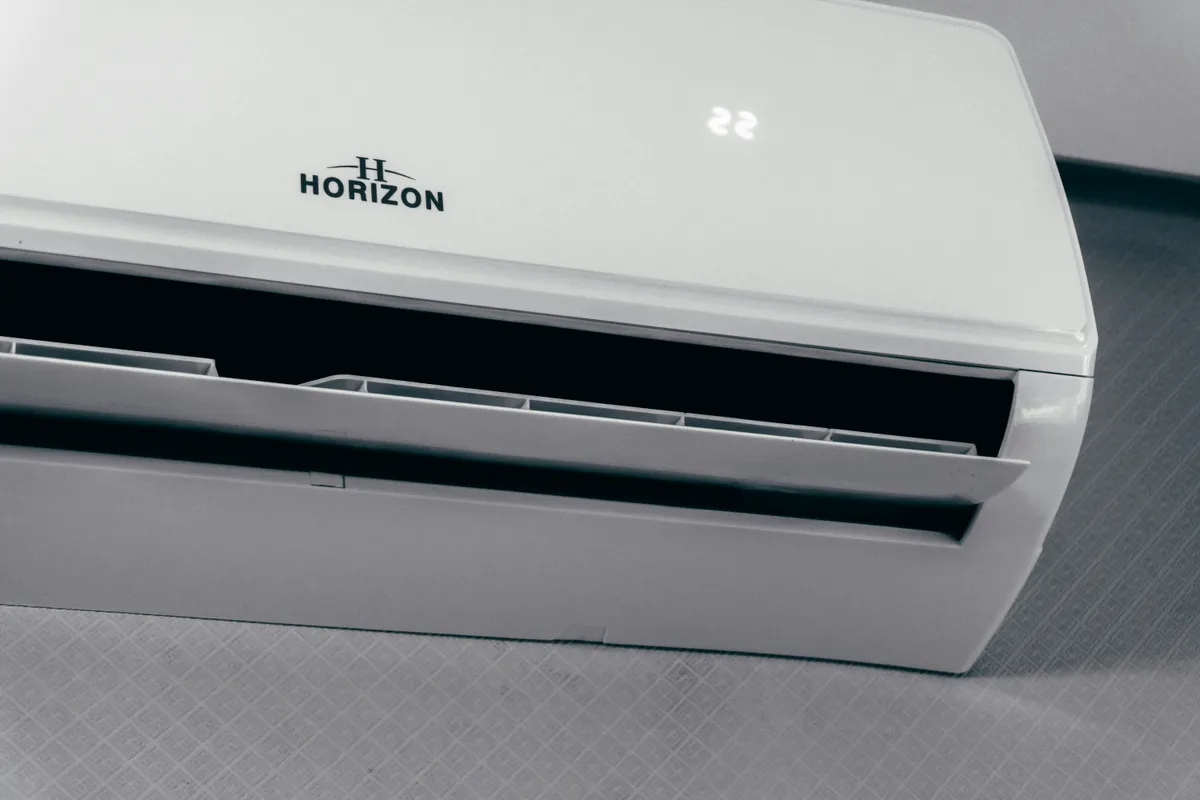
An 8,000 Btu unit, priced
At the new minimum of 16.0: 8,000 / 16 = 500 watts while the compressor runs.
How many hours? ENERGY STAR's own annual figures assume 750 hours a year. We checked: in all 575 listings, the rated annual kWh equals Btu per hour divided by CEER times 0.75. So we'll use 750 hours, which is six hours a day for 125 days, a bedroom unit in a hot climate. Energy: 500 watts x 750 hours / 1,000 = 375 kWh.
| State | Price (cents/kWh) | Cost per season |
|---|---|---|
| Louisiana | 12.72 | $47.70 |
| Texas | 15.88 | $59.55 |
| US average | 18.31 | $68.66 |
| New York | 29.90 | $112.13 |
| California | 33.61 | $126.04 |
| Hawaii | 48.00 | $180.00 |
Prices are EIA July 2026 residential averages. Our arithmetic. Your bill may include fixed fees or tiers.
Under seventy dollars at the national average. That's less than people expect. It's also a ceiling in one sense, since a compressor cycles off once the room is cool, and a floor in another, since a hot, sunny room keeps it running.
What an older unit costs you
Take a unit built to the old minimum: the same 8,000 Btu and a CEER of 10.9. It draws 734 watts. Over 750 hours: 550 kWh, which is $100.79 at the US average.
The CEER 16.0 unit uses 175 kWh less. That's $32.13 a season at 18.31 cents, $22.32 in Louisiana, and $58.97 in California.
Does $32 a year justify a new unit? If you're deciding between two new ones, it barely comes up, because anything built after May 2026 must clear 16.0. It matters when you're replacing a decade-old window unit, or weighing a bargain leftover from before the cutoff. At a $40 premium the efficient model repays in about a season and a quarter at the US average. At $200 it takes about six seasons. Use the payback calculator with 500 and 734 watts, 750 hours and your state, and see where yours lands.
Here's the check that surprised us. The median 8,000 Btu listing in the ENERGY STAR data has a CEER of 15.0, which is 533 watts and 400 kWh a year. Against a 16.0 unit the gap is 25 kWh, or $4.58 a year at the US average and $8.40 in California. Pay ten dollars more for the 16.0 and it takes over two years to come back at the US average.
Four things the label doesn't tell you
Sizing. An oversized unit cools the air fast and shuts off before it removes much humidity, so the room feels clammy. We'd go by the manufacturer's room-size chart, not by a bigger number on the box.
Hours. Our 750 hours is a convention, not a forecast. Count the hot weeks in your climate. Hot-desert homes can run several times that, and mild coastal ones a fraction.
Seal. Gaps around the window frame leak cooled air outside. Foam strips cost a few dollars and cut run time.
Fan only. A fan setting uses a fraction of the cooling draw. If the night is merely warm, try it first.
Other unit types
The 2026 table has more rows than the one we priced. Units with reverse cycle (they also heat) and louvered sides below 20,000 Btu per hour must reach 14.4 CEER. Casement-only models need 13.9 and casement-slider models 15.3. A through-the-wall unit without louvered sides must reach 14.1 from 8,000 to 10,999 Btu and 13.9 from 11,000 to 13,999. The method is identical: divide Btu by CEER and you get watts. Only the minimum differs, so compare a unit with the floor for its own type and size.
The opinionated bit
Many people choose a window unit by the lowest price and treat efficiency as a bonus. We think that's backwards in hot, high-rate states and fine in cool, cheap ones. In California or New York, a few extra dollars up front for a better CEER repays quickly. In Louisiana, you'd better like the extra features. And in every state, check the manufacture date on a bargain unit before you trust it to meet today's floor.
Dollars per degree you actually feel
The season figure hides how the bill behaves hour to hour. At the US average rate, our 500-watt unit costs about nine cents for every hour the compressor runs. Run it four hours on a mild evening and you've spent thirty-seven cents. Keep it on all night in a heat wave, ten hours, and it's about ninety cents. The old 734-watt unit would have cost 54 cents and $1.34 for the same hours. Cheap, until August stacks thirty such nights on top of each other and the number becomes visible on the bill.
Set a timer or a warm-weather schedule if the unit has one, and cool the room before bedtime instead of all night.

Keep the filter clean
Most manuals tell you to wash or replace the air filter every few weeks of use. A clogged filter restricts airflow, and a unit that can't move air has to run longer to hold the same temperature. It's the cheapest efficiency upgrade in this article, and it costs nothing but ten minutes at the sink.
How to check a unit in the store
- Find Btu per hour, CEER and the manufacture date on the label or spec sheet.
- Divide Btu by CEER to get watts.
- Multiply watts by your season's hours and divide by 1,000.
- Multiply by your rate.
For the first principles behind step 3 and 4, read the appliance cost formula.