"Up to 60 minutes of runtime." It's printed in big letters on the box. The next line, in small letters, says the number applies to the lowest setting with the motorized brush off.
That's a fair test of a battery, and a poor test of your living room. So here's how to turn any spec sheet into a number you can compare, using only multiplication and one division.
Step 1: capacity in watt-hours
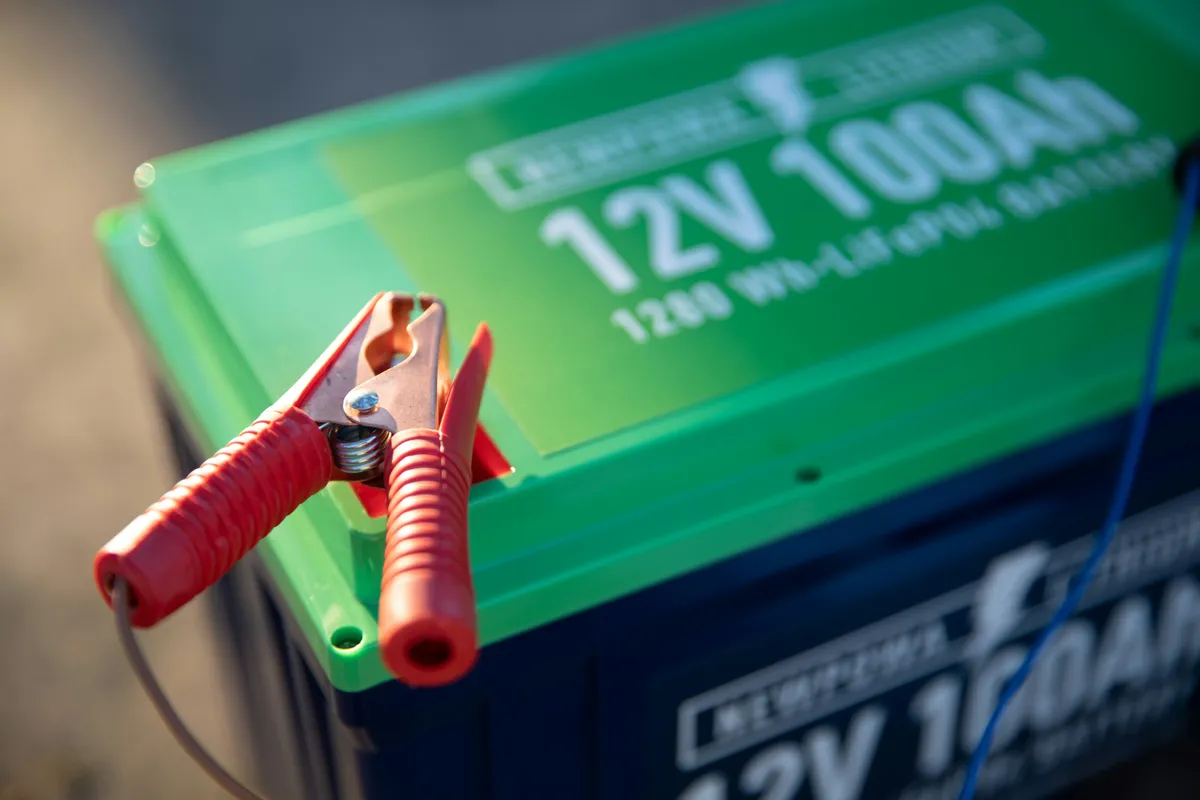
Packs list volts and amp-hours. Multiply them and you get watt-hours, the actual amount of energy stored.
- 21.6 V x 2.5 Ah = 54 Wh
- 25.2 V x 2.0 Ah = 50.4 Wh
- 18 V x 4.0 Ah = 72 Wh
Two packs with the same "Ah" can differ by 20 percent in energy because their voltages differ. Amp-hours alone is a trap. Watt-hours is the fair comparison.
Step 2: runtime = watt-hours / watts
Spec sheets sometimes list motor power in watts. Some list air watts, which measures suction output, not what the motor draws. Check which one you're reading. Where brands give a motor wattage per mode, divide.
Here's a hypothetical 54 Wh pack across three modes. The wattages are illustrative; we're not describing a specific model.
| Mode | Draw (watts) | Runtime on 54 Wh |
|---|---|---|
| Eco | 100 | 32 minutes |
| Auto / medium | 200 | 16 minutes |
| Max | 400 | 8 minutes |
Same battery, a four-to-one spread. That's why a brand can truthfully print "30 minutes" and you can truthfully get eight.
Step 3: handle the headline claim
Take the claim of "60 minutes" on a 54 Wh pack. Work backward: 54 Wh / 1 hour = 54 watts. A motor drawing 54 watts is nowhere near what a floor head needs on carpet. It's a number measured in a lab corner, and you now know how to spot it.
If a spec sheet lists watt-hours and a minute figure but no mode, divide watt-hours by the minutes. The answer is the average draw the claim assumes. Compare that to what you'd use at home.
Cost: the battery is the expensive part
Charging a 54 Wh pack takes about 0.054 kWh. At the US average residential price of 18.31 cents per kWh in July 2026, that's about 1 cent. Charger losses add a bit. We wouldn't worry about it.
Battery wear is the real bill. If a replacement pack costs $60 and gives 500 full charges, each charge costs 12 cents of pack life. That's twelve times the electricity. The numbers are a round example, so use your own pack price and the manufacturer's cycle figure if there is one.
Put them in the battery tab of our payback calculator: pack price, watt-hours, average watts, cycles. It returns minutes per charge and the cost per hour of cleaning, split into tool, battery wear and electricity.
What the pack does as it ages
Lithium-ion cycle life is usually quoted as the number of cycles before capacity falls to 70 percent. Battery University lists about 300 cycles to that point at full depth of discharge for NMC cells. At 70 percent, our hypothetical 54 Wh pack holds about 37.8 Wh. On eco at 100 watts that's 22.7 minutes instead of 32. On max at 400 watts it's under 6 minutes instead of 8.
So the runtime you measure in month one is the best you'll see. Plan the pack around the cleaning job you'll still need it to do in year three, and check whether the replacement costs less than the vacuum.
Three questions to ask before you buy
Is the pack swappable? A removable pack means a second battery doubles your session for the price of a pack, and a failed pack doesn't kill the vacuum. Our opinion: a cordless vacuum with a sealed battery is a vacuum with a built-in expiry date.
What does the pack cost on its own? Check the replacement price before you buy the vacuum. If it's half the vacuum, you've learned something about the next five years.
How long is the job? A 700-square-foot flat on max suction for six minutes fits an 8-minute runtime. A three-bedroom house does not. Match watt-hours to the longest cleaning session you actually do.
A worked spec sheet
Suppose a box shows a 25.2 V pack, 2.5 Ah, and "up to 45 minutes." Capacity: 25.2 x 2.5 = 63 Wh. Forty-five minutes is 0.75 hours, so the claim assumes an average draw of 63 / 0.75 = 84 watts. If the manual says the carpet mode pulls 250 watts, then 63 / 250 = 0.25 hours, fifteen minutes. The same box, an honest 15 minutes at the setting you'd use on a rug. Which number goes in your head when you're deciding?
The wattages here are invented to show the method; no brand is being described.
What we ignored
Three things aren't in this math: motor efficiency differences between brands, battery aging over the pack's life, and the fact that a cold battery delivers less than a warm one. Each shifts the answer a little. None flips it. If you'd like to keep a pack healthy, see our guide to storing lithium-ion tool batteries, which applies to vacuum packs too.
The one-minute method
- Volts x amp-hours = watt-hours.
- Find the wattage for the mode you'll use.
- Divide. That's your runtime.
- Check the replacement pack price.
Do those four steps for two models and you've done more homework than the box asks for.